
Palembang, Warganet – Dulmuluk, a traditional performing art from Palembang, was more than just a form of cultural entertainment. Historical research suggests it once played a strategic role in supporting the city’s modernization efforts and attracting foreign investors during the Dutch colonial era.
Dr. Dedi Irwanto, head of the Community Service Team from the History Education Study Program at the Faculty of Teacher Training and Education, Sriwijaya University (Unsri), explained that after Palembang was officially designated as a Stadsgemeente (municipality) on April 6, 1906, the Dutch colonial government sought to stimulate the local economy by organizing large-scale public events designed to draw visitors and investors.
“After Palembang was designated as a Stadsgemeente on April 6, 1906, the colonial government sought ways to boost the city’s economy through major public events,” Dedi said on Monday (July 27, 2026).
One of the most prominent celebrations was Koninginnedag, the birthday of Queen Wilhelmina of the Netherlands, locally known as the Night Market Week. The week-long festival featured cultural performances and public attractions as part of the colonial administration’s effort to showcase Palembang as a modern and prosperous city.
Between 1906 and 1910, the Dutch authorities invited the Singapore-based “Mahkota India” Komedi Stamboel troupe to perform at the opening and closing ceremonies of Koninginnedag. Their performances later inspired renowned Palembang artist Wak Nang Nong to develop a theatrical production rooted in local stories.
“It was the performance of ‘Mahkota India’ that inspired Wak Nang Nong, one of Palembang’s greatest artists of the time, to create a similar theatrical performance based on local narratives,” Dedi said.
In 1910, Wak Nang Nong adapted the Syair Abdulmuluk into a stage production that became known as Abdulmoeloek Theatre. Established at his residence in Tangga Panjang, Sungai Kedemangan, Kampung 7 Ulu, the theater also served as a training center for local actors.
After more than five months of intensive rehearsals, Abdulmoeloek Theatre staged its first public performances from April 16 to 22, 1910, in Guguk Tanggo Takat. The performances drew enthusiastic audiences and quickly became one of the city’s most talked-about cultural attractions.
The production also received favorable reviews from the Dutch-language newspaper Palembangsch Nieuwsblad, which praised its entertainment value. Wak Nang Nong was even honored with the title “Toean Nang Nong, Abdulmoeloek-theater Directeur,” recognizing his talent as both director and performer.
“The local Dutch newspaper responded very positively. Wak Nang Nong’s performance was considered highly entertaining, and he was praised as ‘Toean Nang Nong, Abdulmoeloek-theater Directeur,’ who skillfully directed every aspect of the production while also performing on stage,” Dedi added.
As its popularity grew, Abdulmoeloek Theatre toured various districts across the Palembang hinterland before becoming a regular performer at the opening ceremony of Koninginnedag beginning in 1910, replacing the Singapore-based troupe.
The success of Dulmuluk also brought the troupe to prestigious venues such as the Societeit Hall, where they entertained Malay and Chinese civil servants as well as Europeans who understood the Malay language. At the time, acting in the theater provided a significant source of income, improving the livelihoods of many performers.
Meanwhile, Prof. Farida emphasized that reintroducing Dulmuluk has become increasingly urgent to prevent the cultural heritage from fading into obscurity.
“During the 1960s and 1970s, I frequently watched Dulmuluk performances at community wedding celebrations. Today, however, Dulmuluk is mostly presented as a ceremonial performance at government events rather than as a form of popular public entertainment,” she recalled.
According to Farida, this shift has left many people—especially younger generations—unfamiliar with one of Palembang’s most important cultural traditions.
“It is our collective responsibility to introduce it once again,” she said.
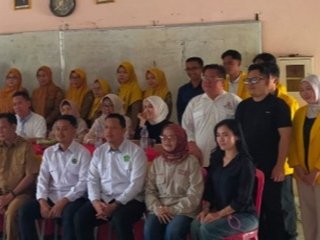
The historical account of Dulmuluk was presented during a community engagement program organized by Sriwijaya University’s History Education Study Program at SMA Negeri 1 Tanjung Batu in Ogan Ilir. Through the initiative, history teachers were encouraged to develop local history learning materials in the form of interactive e-comics to make the subject more engaging while helping preserve Palembang’s cultural heritage.