
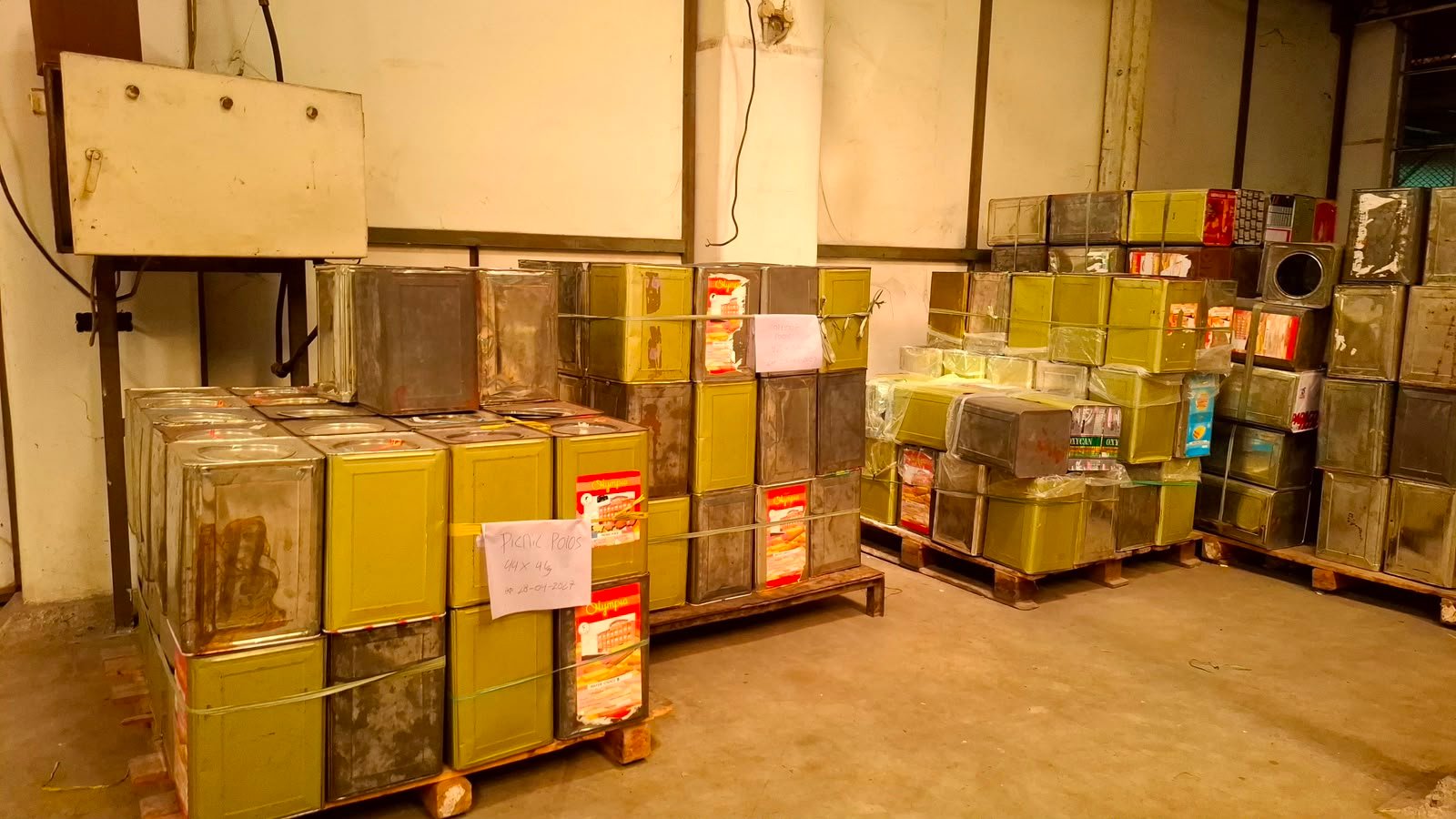
Bandung, Warganet – Behind the historic buildings lining Cibadak Street, one of Bandung’s industrial heritage landmarks continues to operate: Olympia Biscuit Factory. Located at Jalan Cibadak No. 234, the factory is home to one of Indonesia’s legendary biscuit brands, which began production in 1928 and has maintained its operations for nearly a century.
For decades, Olympia has been more than just a biscuit producer. The factory has become part of Bandung’s industrial history, preserving its legacy amid rapid modernization and the growth of today’s food industry.
According to information published on the official website of the Bandung City Government, Olympia Biscuit Factory’s successor, Liem Swie Hong, explained that Olympia’s journey is closely connected to the history of Bandung’s Chinatown area during the Dutch colonial period. At that time, many Chinese communities played a role as middlemen or trade intermediaries between the colonial government and local society. Seeing the growing demand for biscuits among Dutch residents, the founding family established the factory to meet that market.
“At that time, many Chinese people worked as middlemen. Dutch people really liked biscuits, so the idea emerged to establish a biscuit factory to fulfill their needs. The name Olympia itself was taken from the word ‘Olympics’, as a hope that our products would have the best quality and become widely recognized,” said Liem Swie Hong.
Over the years, Olympia grew into one of Bandung’s largest biscuit factories. During its peak period, the factory implemented a fully integrated production system, covering everything from raw material processing and producing its own packaging tins to designing and manufacturing production machines independently.
This capability made Olympia one of the industries that could develop its production process without relying on external components from overseas.
However, Olympia’s long journey was not without challenges. Historical events such as the Bandung Sea of Fire, social dynamics in the early 1960s, and national political changes became obstacles that the company had to overcome.
Despite these challenges, Olympia managed to survive and once reached its golden era, employing around 560 workers and contributing to Bandung’s economic growth.
“Olympia was once a fully integrated factory. We produced our own tins, processed raw materials, and even manufactured machines for production needs. At its peak, Olympia had around 560 employees. Today, the biggest challenge is that our production facilities are aging and require modernization so we can continue to grow,” he said.
Beyond its industrial history, Olympia is also part of the life stories of its employees. One of them is Nono, the factory’s longest-serving employee, who has worked at Olympia since 1980.
For more than four decades, Nono has witnessed various changes at Olympia, from its busiest production periods to the challenges faced in maintaining the factory’s existence.
“I started working at Olympia in 1980. Throughout my years here, I have experienced many situations and changes at this factory. I have witnessed many transformations, but I am grateful that Olympia continues to survive until today,” Nono said.
Amid increasingly competitive industrial development, Olympia continues to maintain its existence. Upgrading production facilities remains a key hope for the legendary factory to expand its market while preserving the historical values that have been built over decades.
More than just a biscuit manufacturer, Olympia Biscuit Factory represents the resilience of a local industry that has survived through changing times. Its existence reflects Bandung’s industrial heritage and serves as a reminder of the importance of preserving historical industries as part of the city’s identity.