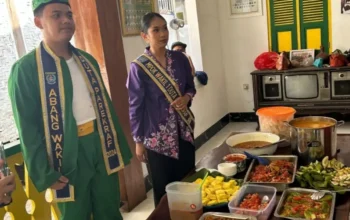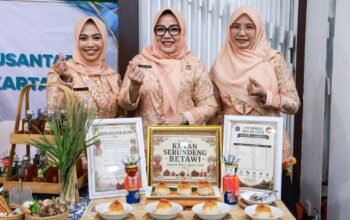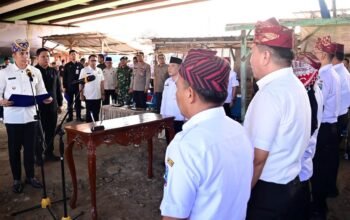

Depok, Warganet – Local cuisine is becoming a new way for young people in Depok to reconnect with their cultural identity. Adam Hera Hutabarat and Riska Sakinah, two young talents from Depok, have launched a gastronomic project called “Rasakala” to promote traditional Betawi cuisine while highlighting the stories and cultural values behind each dish.
According to the official Depok City Government news portal, Saturday (August 8, 2026), Rasakala is a social project initiated by Adam and Riska, who were named Abang-Mpok Depok 2024 and later became finalists in the 2026 Mojang Jajaka Jawa Barat program.
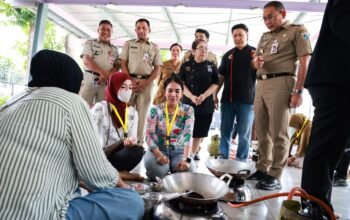
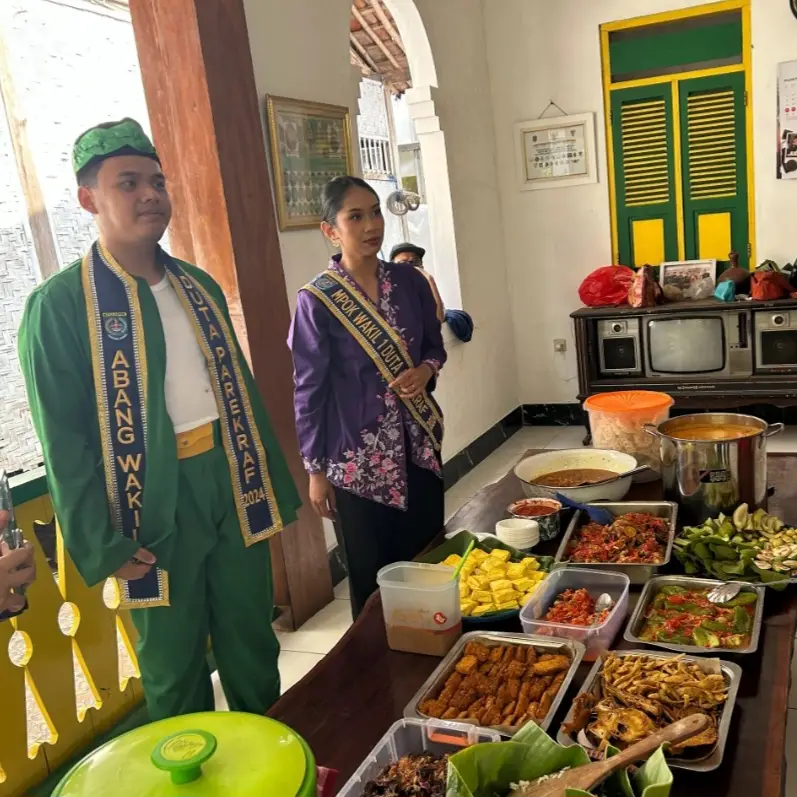
The project encourages younger generations, particularly students studying culinary arts and hospitality, to explore traditional Betawi cuisine from Depok. Participants are introduced not only to the dishes themselves, but also to their ingredients, cooking techniques, traditional equipment and the cultural philosophies behind them.
Adam explained that Rasakala stands for “Rajut Asa Sebuah Kota Lewat Cerita,” which roughly means “weaving a city’s aspirations through stories.”
“The idea is simple. We want to strengthen Depok’s place identity as a Betawi space and a home for Betawi Ora arts,” Adam said.
According to him, food is more than just a meal. Each dish carries stories, artistic elements, cooking techniques and philosophies that reflect the identity of the community.
“Through Rasakala, we want to show that food is not merely a dish. It is a story presented through art, cooking techniques and the philosophy behind the food and how it is prepared,” he said.
The initiative involves students in learning about traditional Betawi dishes from Depok. Some of the ingredients used in the program are sourced from women farmer groups in the Tapos area before being prepared together at Rumah Budaya.
Riska said the approach is important because traditional Betawi cuisine from Depok still needs to be introduced more widely, particularly among younger generations.
“When we talk about Depok, people do not necessarily immediately associate the city with its Betawi culture or cuisine,” Riska said.
Yet Depok has a variety of traditional dishes that could become part of the city’s culinary identity, including pecak, sayur besan, sayur asam bening and sayur godog asam.
Adam hopes these dishes can eventually become culinary attractions for visitors coming to Depok.
“If we go to Bogor, we know we should try soto mie. If we go to Bandung, we know there is batagor. When people come to Depok, we want them to know that they should try pecak, sayur besan, sayur asam bening or sayur godog asam,” he said.
For Adam and Riska, promoting local cuisine also offers opportunities to connect culinary heritage with tourism and the creative economy. Traditional food can be developed not only as a culinary product, but also as an experience that allows visitors to understand the character of a place.
Riska hopes Rasakala will not end as a social project developed as part of the 2026 Mojang Jajaka Jawa Barat program. She wants it to grow into a sustainable initiative involving the Depok City Government, the Department of Youth, Sports, Culture and Tourism, local communities and creative economy players.
“Gastronomy is actually much broader than traditional food. Food can be presented through narratives and experiences that make people remember what they experienced when eating and eventually want to come back,” she said.
Both Adam and Riska have strong personal connections to Depok.
Adam, a graduate of the University of Indonesia’s Geography program, has lived in Depok for nearly 18 years. He still remembers a time when gardens and fish ponds could easily be found across different parts of the city.
“When I talk about my connection to Depok, this city has clearly become part of who I am,” he said.
Meanwhile, Riska, a graduate of Politeknik Negeri Jakarta, grew up in Depok. During an exchange program at the University of Nottingham in the United Kingdom, she also introduced stories about Depok’s culture and traditional textiles.
“I am proud to have my identity as a resident of Depok. That is what I want to promote—that I have an identity as part of the Depok community and that I am proud of my culture,” she said.
Through Rasakala, Adam and Riska want to demonstrate that cultural preservation can begin with something as simple and familiar as food.
Learning about the ingredients, understanding traditional cooking methods, discovering the stories behind each dish and sharing them with younger generations are all part of their effort to preserve Betawi culinary heritage in Depok.
From a plate of pecak and sayur besan to sayur asam bening, traditional dishes carry stories of Depok’s community and cultural heritage. Through Rasakala, the two young cultural advocates hope Betawi cuisine from Depok will gain wider recognition while strengthening the city’s cultural identity and tourism appeal.